
Robotics
ROBOIQ's STEP Teaching System
ROBOIQ’s STEP Teaching System is designed to build children's comprehensive skills, learning habits, and project-based problem-solving abilities through a gradual, step-by-step approach.
The system integrates observation, comprehension, critical thinking, communication, creativity, and hands-on practice, fully aligned with the cognitive development patterns of children aged 3–17.
Our STEP framework is applied consistently across Robotics, Maker (Handcraft & Engineering Art), and Coding programs, ensuring that students grow with a balanced combination of logic, creativity, and practical engineering skills.
⭐️ STEP Teaching System ⭐️
Course Description
• 48 fun programming lessons covering 6 major themes including animals and transportation, hands-on construction + programming control, integrating multidisciplinary knowledge to cultivate children's logical thinking and creativity.
• Use physical cards as instruction carriers and use with a reading pen: the reading pen can trigger the programming module action by lightly tapping the card. There is no screen dependence throughout the process, making programming learning closer to hands-on practice.
Junior Robot Programming
• Scratch : 80 lessons to gradually develop logical thinking, design, and problem-solving skills
• Strengthen logical thinking: By combining instructions to achieve animations, games, and other effects, it is necessary to sort out the logic of "conditional judgment" and "loop execution", and train children's ability to think in an orderly manner and break down problems in practice.
• Connecting advanced learning with competitions: It can lay the foundation for subsequent Python , C++ and other code programming. Its visual programming logic can also be used for World Robot Competition operations, accumulating practical experience in competitions in advance and promoting the development of scientific and technological expertise.
Programming Class
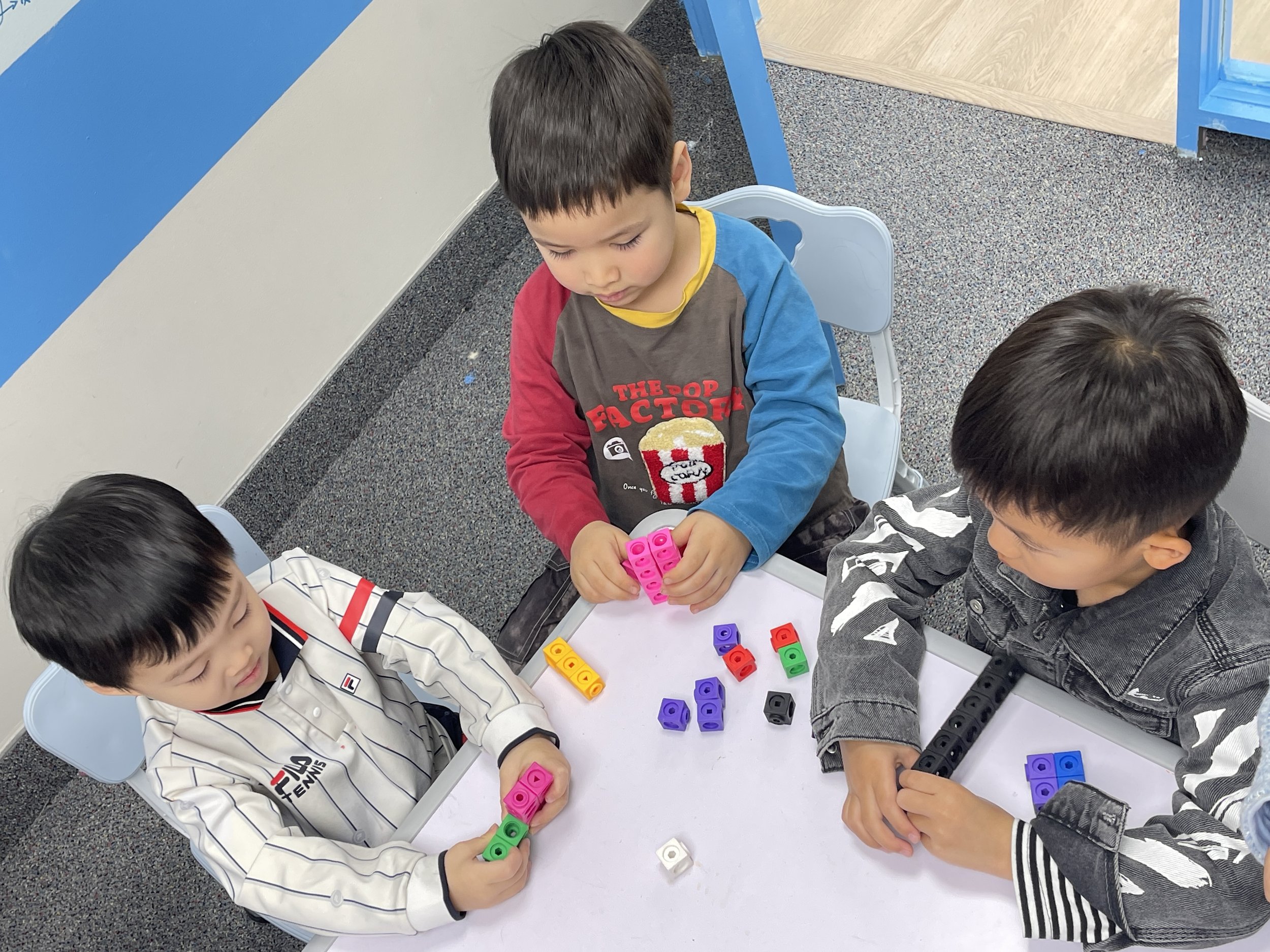
• Fun enlightenment: Use comics and games to transform mathematics into a "level-breaking task", and add a large number of interesting exercises to eliminate young children's fear of difficulties and make mathematics learning more interesting.
• Strong Thinking Advanced: The difficulty level exceeds the conventional system, focusing on logical reasoning and reverse thinking. Level 5 includes junior high school knowledge points and can be connected to AMC8 , laying the foundation for high-level competitions.
• Scientific adaptation: 1-5 level ladder design, covering basic and extended content, equipped with pre-learning test and dynamic assessment, accurately matching students' abilities, taking into account both consolidation and improvement.
Mathematics Competition Class
Core Value of Robotics
Perfect Practice of STEM Teaching
The courses realize the interdisciplinary integration of Science, Technology, Engineering, and Mathematics, providing children with professional and comprehensive STEM enlightenment education.
Exclusive STEP x STEM Double Helix Teaching Method
Through Support, Teach, Encourage, and Practice, we conduct progressive teaching, integrating education with fun, enabling children to develop both hands and brains during assembly.
Leveled Teaching & Patented Teaching Tools
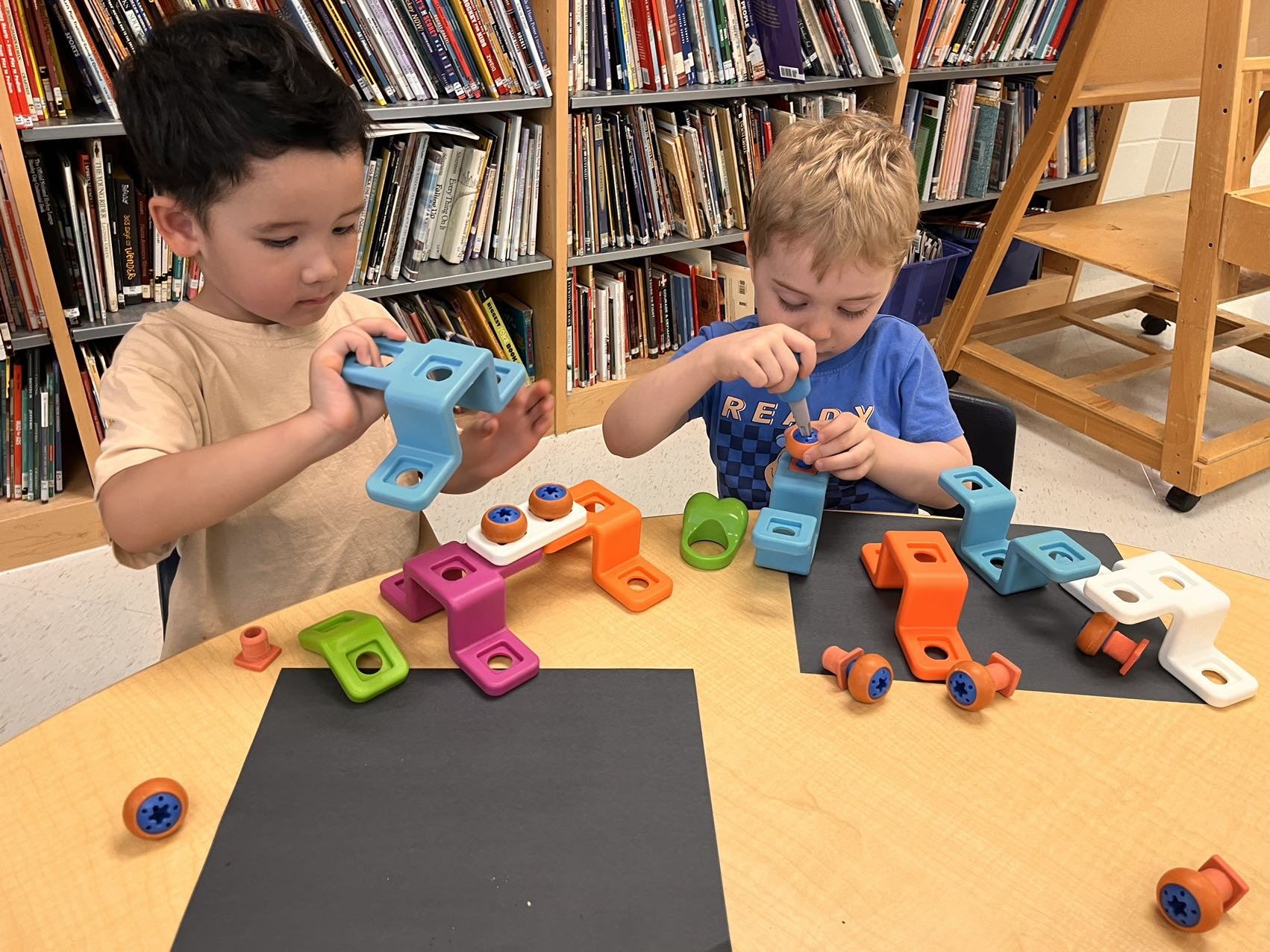
Courses are divided into 5 different levels from easy to difficult according to children’s age and ability, meeting the needs of children of all age groups; Exclusive research and designed patented teaching tools fill the gap in the market where robotics course parts are too small for young children to assemble.
PBL (Project Based Larning)
Starting from real-life examples, guiding students to observe, think, assemble, correct mistakes, and innovate. Each course includes a knowledge introduction section.
Core Competitiveness
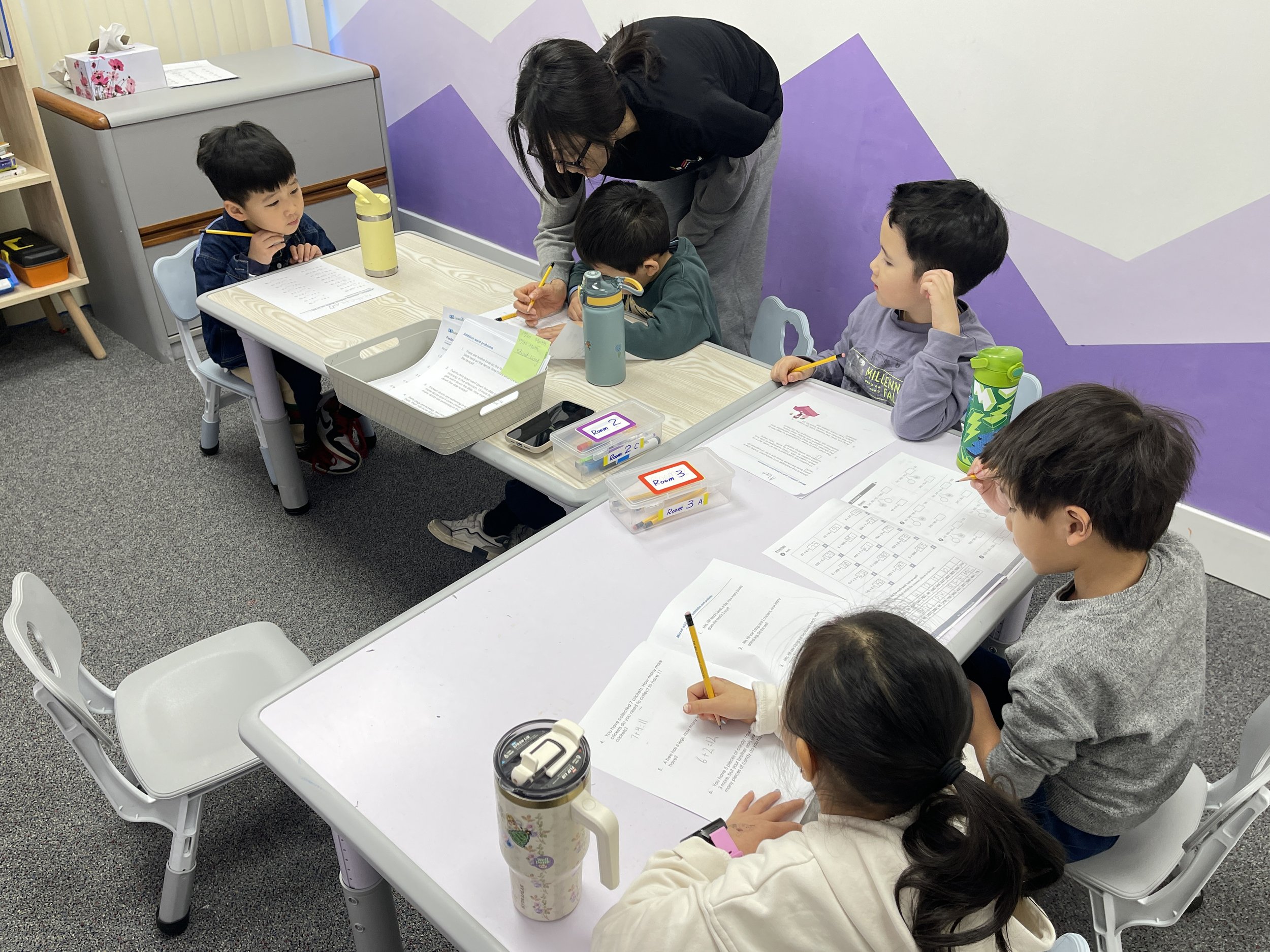
• 1:5 teacher-student ratio, in-depth guided classroom
Unlike most educational institutions, we offer small classes, with no more than five students per class. This ensures that every student receives adequate attention from the teacher. Teachers continuously record and analyze each student's development.
• RECE teacher teaching
For young children, learning content and teaching methods are equally important. Experienced Ontario registered teachers teach to ensure that children's learning and physical and mental development are synchronized.
High-quality small class teaching
Independently developed courses + patented teaching aids
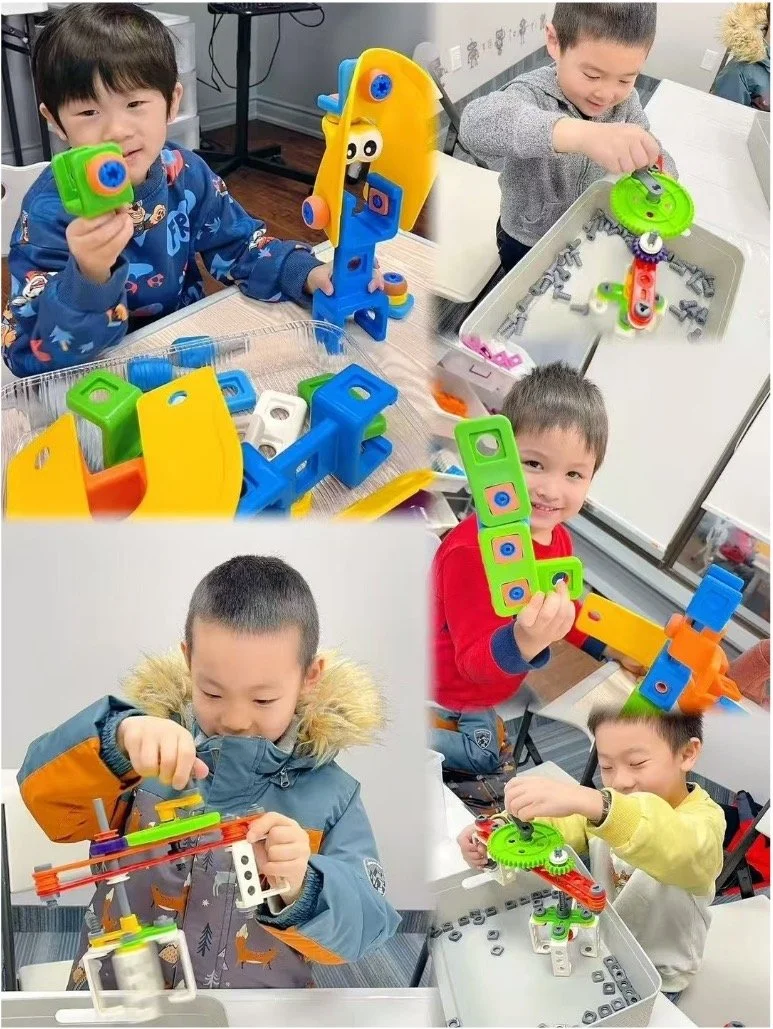
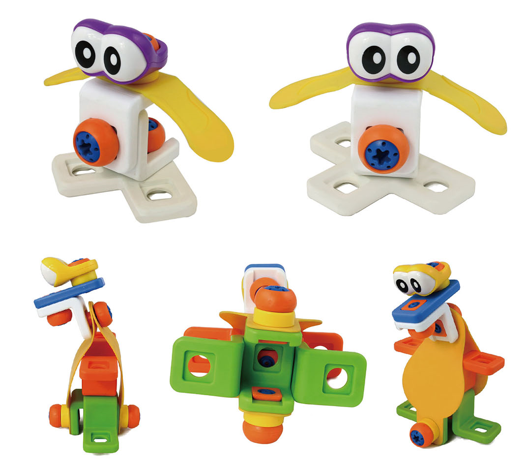
• Unlike Lego, our components have a mechanical feel and can be cleverly combined to create a variety of finished products.
• Our patented teaching aids are designed for children of all ages. Large pieces are especially easy for younger children to grasp. Children can assemble the toys independently
• Open the door to engineers with nuts and screws
• A worry-free, child-friendly, card-based programming teaching enlightenment course that reduces screen time and introduces programming thinking!
Three major courses complement each other
• Singapore Mathematics and Mathematical Competitions:
The importance of early math education is undeniable. Young children are a prime time for developing numerical sense and logical thinking• Phonics:
• To understand the questions, children need to have the necessary phonics skills. ROBOIQ uses the Oxford Phonics textbook. From elementary to reading and writing, the graded curriculum fully meets the English learning needs of children of all ages.
• Robotics and programming allow children to develop their hands-on skills and imagination while also fostering a sense of space and creative thinking